The False Choice
The equestrian world presents a choice that feels inevitable:
You can have a happy horse, OR you can ride.
You can be kind, OR you can develop collection.
You can prioritize emotional wellbeing, OR physical soundness.
Traditional riders accept that results require pressure. Clicker trainers conclude that riding means compromise.
Both groups are responding rationally to what they’ve seen.
But what if the choice itself is the problem? What if these were never opposites—just incomplete examples that made them appear that way?
The Integration (In Brief)
The choice is false. Classical dressage principles and Alexandra Kurland’s clicker training aren’t separate philosophies. They’re one integrated approach. One language, spoken fluently by different masters.
The problem isn’t bad will. It’s a gap — one missing piece. Traditional riders create it through force. Clicker trainers create it differently: perfect positive reinforcement without biomechanical foundation. Different methods. The same crack
Both sides are abandoning what they need. Clicker trainers reject biomechanical knowledge because they’ve only seen it paired with force. Traditional riders dismiss a clicker training approach because they’ve only seen it applied to groundwork.
What we’re building has a pattern. Learn to recognize it, and you see it everywhere. There’s one idea that makes it visible. It starts with a paper ball.
The integration creates both. Happy horses AND therapeutic riding. Kindness AND results. Emotional wellbeing AND physical soundness. Not through compromise. Through recognition that these were always describing the same thing.
Depth is the path. This takes years. Patient, systematic building. There is no shortcut to soundness.
Ready to see what you’ve been missing? Read on.
The Paper Ball
Take a piece of paper and crumple it into a ball.
From a distance, it looks round. It has the shape you wanted.
But try to roll it. Watch what happens.
It doesn’t move smoothly. It stutters, catches, moves unpredictably. Full of hidden resistance.
Now flatten it out. Look at what creating that false form did.
Wrinkles everywhere. Lines of tension. Damage that won’t smooth out.
This is what most of us are creating with our horses.
The Forced Ball: Traditional Methods
The form of collection can be created through pressure.
Elevated steps. Arched neck. The appearance of “frame.” From the outside, it looks correct.
But inside the horse’s body? Wrinkles.
Tension. Muscles compressed, working against each other. Jaw tight. Back hollow despite the arched neck. Balance forced into position instead of developed organically.
The form exists. The essence is missing.
True collection serves a purpose: balance. Balance that allows the horse to carry weight efficiently, move freely, stay sound.
But balance requires relaxation. Force creates tension. Tension prevents balance.
Over time, those wrinkles cause breakdown. Horses that look “well-trained” but can’t stay sound past twelve.
The shape exists. But at the horse’s expense.
The Dissected Ball: Positive Reinforcement Without Biomechanics
Here’s the part that catches people by surprise:
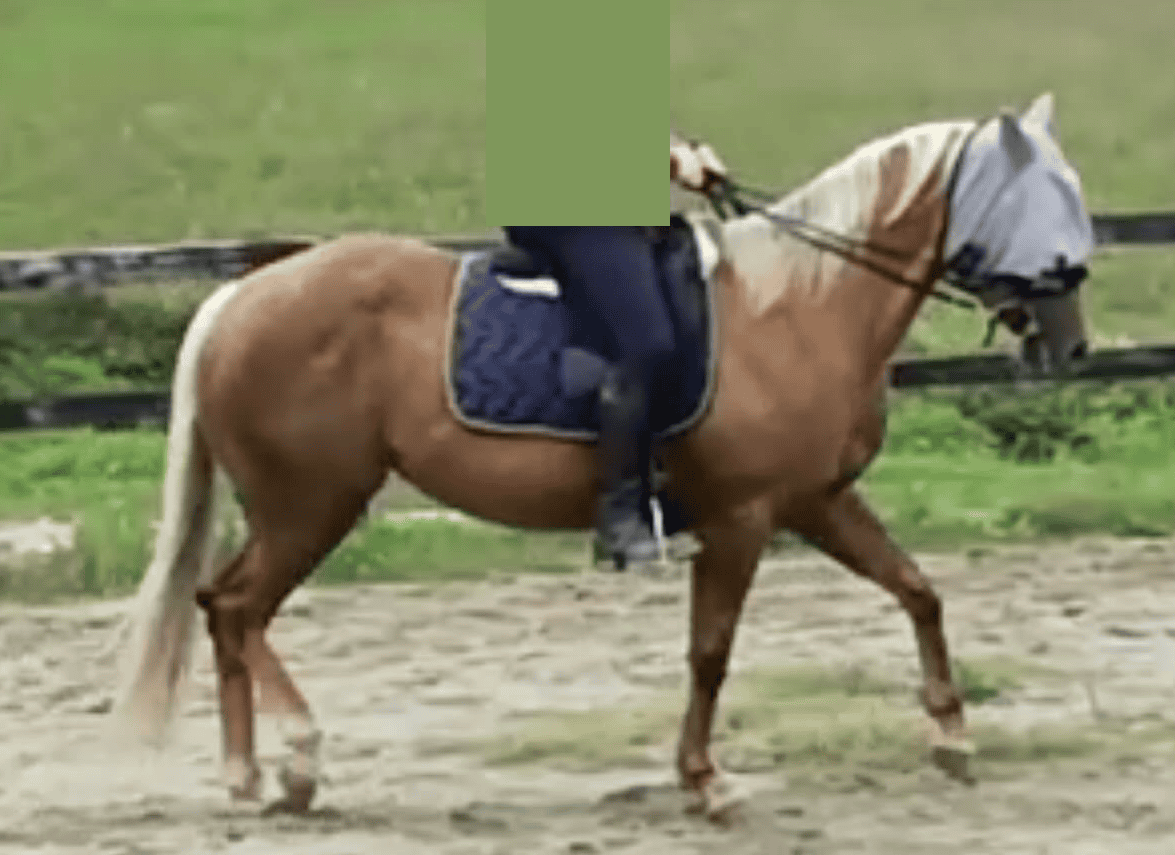
Wrinkled balls can also emerge with positive reinforcement.
Imagine cutting a ball apart, teaching each piece separately with perfect clicker training, then reassembling them.
Lift the foreleg—clear criteria, horse is happy. Arch the neck—systematic shaping. Engage the hind leg—patient progression.
Then these pieces get assembled into what looks like collection.
The ball is still wrinkled.
Not because you used force. But because you built isolated movements and assembled them, rather than developing the integrated balance that makes those movements possible.
The horse lifts the foreleg without the strength to support it. Creates the arched neck without the lifted back that should create it. Steps under without the suppleness that makes it therapeutic.
Form without essence. Pieces without integration.
Even with kind training, wrinkles accumulate. Strain. Compensation. The horse is willing but unprepared physically.
This is why biomechanical knowledge matters—even for clicker trainers.
Not to make you harsh but to show you what needs to develop and in what order.
The Smooth Ball: What Genuine Development Looks Like
A truly smooth ball isn’t created by force or by assembling pieces.
It’s developed by building layers on layers.
Each layer builds improved balance AND understanding. You start easy—only what the horse can do now. With better movement, the next layer can be added.
Simple turns. Changes of direction. Transitions. More complexity.
While consistently maintaining or returning to relaxation.
Each layer must be within current capacity. Each prepares the foundation for what’s next.
This requires knowing balance versus compensation. Strength versus tension. When the horse is ready versus when they need more time at this layer.
That’s the smooth ball.
No wrinkles. No tension. No movements the body isn’t prepared for.
Just systematic development where relaxation is maintained and each layer builds capacity for what follows.
Roll it and it glides—ready to move in any direction.
Why Both Are Essential
Without biomechanical knowledge, you might build layers systematically but not recognize when you’re creating compensation instead of balance.
Progress feels real. Wrinkles are building unseen.
Without constructional methodology, you might understand balance but force the horse through the progression.
What smooth looks like is clear. But wrinkles emerge in the attempt to get there.
Both are essential:
Understanding of what balance is, what creates it, what undermines it.
AND
Methodology that builds it systematically while maintaining relaxation.
Integration at every stage. Not occasionally—continuously.
The Visibility Problem
Both clicker trainers and traditional riders are making rational decisions based on incomplete examples.
The problem isn’t the people. The problem is what’s visible.
Clicker trainers see: Competition dressage. Gaping mouths. Stressed horses. Rollkur. Scandals at the highest levels.
If this is all you’ve seen, walking away makes complete sense.
They haven’t seen Anja Beran’s horses—written off as too damaged—presenting exquisite piaffe into their thirties. Riding that heals instead of harms.
They haven’t seen it because classical dressage—the real thing—is rare. Not what dominates.
Traditional riders see: Clicker tricks, targets and groundwork. Happy horses but no visible biomechanical development.
If this is all you’ve seen, skepticism makes complete sense.
They haven’t seen systematic clicker training building the same balance, collection, therapeutic movement that classical work achieves.
They haven’t seen it because advanced development takes years. It’s not optimized for social media.
Both are abandoning exactly what they need.
Clicker trainers need classical principles—but they’ve only seen them taught harshly.
Traditional riders need constructional methodology—but they’ve only seen it used for groundwork.
Neither has seen the integration.
The Systemic Forces
But why does this visibility problem persist?
Economics: Competition wins ribbons, gets sponsorships, creates viral content. Classical work doesn’t compete well. Quick results are more marketable than patient progression.
Psychology: Before-and-after transformations are more satisfying than slow layering. We want dramatic change we can see and share. Wrinkled balls deliver that. Smooth balls take years.
Culture: We’ve normalized wrinkled balls as “good training.” Tense horses in frames. Happy horses doing isolated movements. Both look like success if you don’t know what to look for.
Platform dynamics: Social media rewards fast, dramatic, shareable. Patient development doesn’t compress into short videos. The algorithm doesn’t favor depth.
These forces aren’t malicious. They’re systemic.
They make wrinkled balls visible while smooth balls stay hidden.
Understanding this changes how you see the industry. You’re not fighting bad people. You’re navigating systems that make certain things visible and others invisible.
The integration requires making smooth balls visible through different channels.
The integration rests on four foundations that continuously inform each other: classical dressage, clicker training, Feldenkrais Method, and behaviour science.
Classical principles without systematic teaching methods often default to force. Clicker training without biomechanical understanding might create happy horses with developing physical problems. Riding without somatic awareness means asking horses to balance while you’re unbalanced. Methods without scientific understanding become rote recipes.
Together, they form one coherent approach.
A-Squared: One Language
Anja Beran’s classical principles show which movement patterns create soundness. What real balance is.
Alexandra Kurland’s clicker training shows how to build those patterns constructionally.
These aren’t separate systems.
For example, Alexandra’s hip-shoulder-shoulder exercise IS teaching engagement and stepping into the outside rein—a classical principle. The biomechanics are identical.
Anja’s patient progression from simple to complex mirrors constructional building.
They’re speaking the same language from different entry points.
One language. Classical principles guiding WHAT to build. Clicker training guiding HOW.
Building Instead of Eliminating
The integration depends on a fundamental shift in how we think about training challenges.
Not: What’s wrong? Make it stop.
But: What do we want to build? What new repertoires create better options?
This shift—from pathological thinking to constructional thinking—changes everything. From fighting behaviour to creating possibilities. From wrinkled balls to smooth ones.
It’s the difference between fixing what’s broken and building what’s possible.
Where does that leave you?
If you’re a clicker trainer:
You want to ride. You’re just not sure how to get there without risking the relationship you built.
If you’re a traditional rider:
You’ve seen what harsh training does. You’re still looking for a way to do serious work without it.
What We’re Building
Every time someone builds smooth balls instead of wrinkled ones, we prove it’s possible.
Every time a clicker trainer builds collection rooted in classical principles, we show that developing our horses under saddle doesn’t require force.
Every time a traditional rider achieves exquisite balance by explaining instead of forcing — we show that force was never necessary.
The examples change minds more than arguments ever could.
We’re not arguing for The Integration. We’re living it. Making it visible through our horses, our methods, our results.
Once seen, this can’t be unseen.
The Integration makes both possible. Smooth balls, not wrinkled ones.
Every training decision you make—you’ll recognize whether you’re building wrinkles or smoothness. Whether you’re forcing form or developing capacity. Whether you’re assembling pieces or building integrated layers.
For the horse. For us.